

In my experience, the first plant that appears in later winter is always Skunk-cabbage.

We saw one shoot this morning.

Here is what the Field Manual of Michigan Flora says about Skunk-cabbage:
Common in swamps, ravines and hollows in beech-maple forests, floodplains and bottomland, stream borders, etc.
The familiar flowering spadix with its strong odor and hooded spathe is the first wildflower of the spring, often blooming through the snow (and producing heat to melt snow and ice and presumably warm the interior for the pollinators comfort;
Photos from other walks:


I must congratulate the seven walkers who appeared this morning prepared for the iciest conditions that I have ever had in 16 years of leading TDSB walks.


Today’s group:


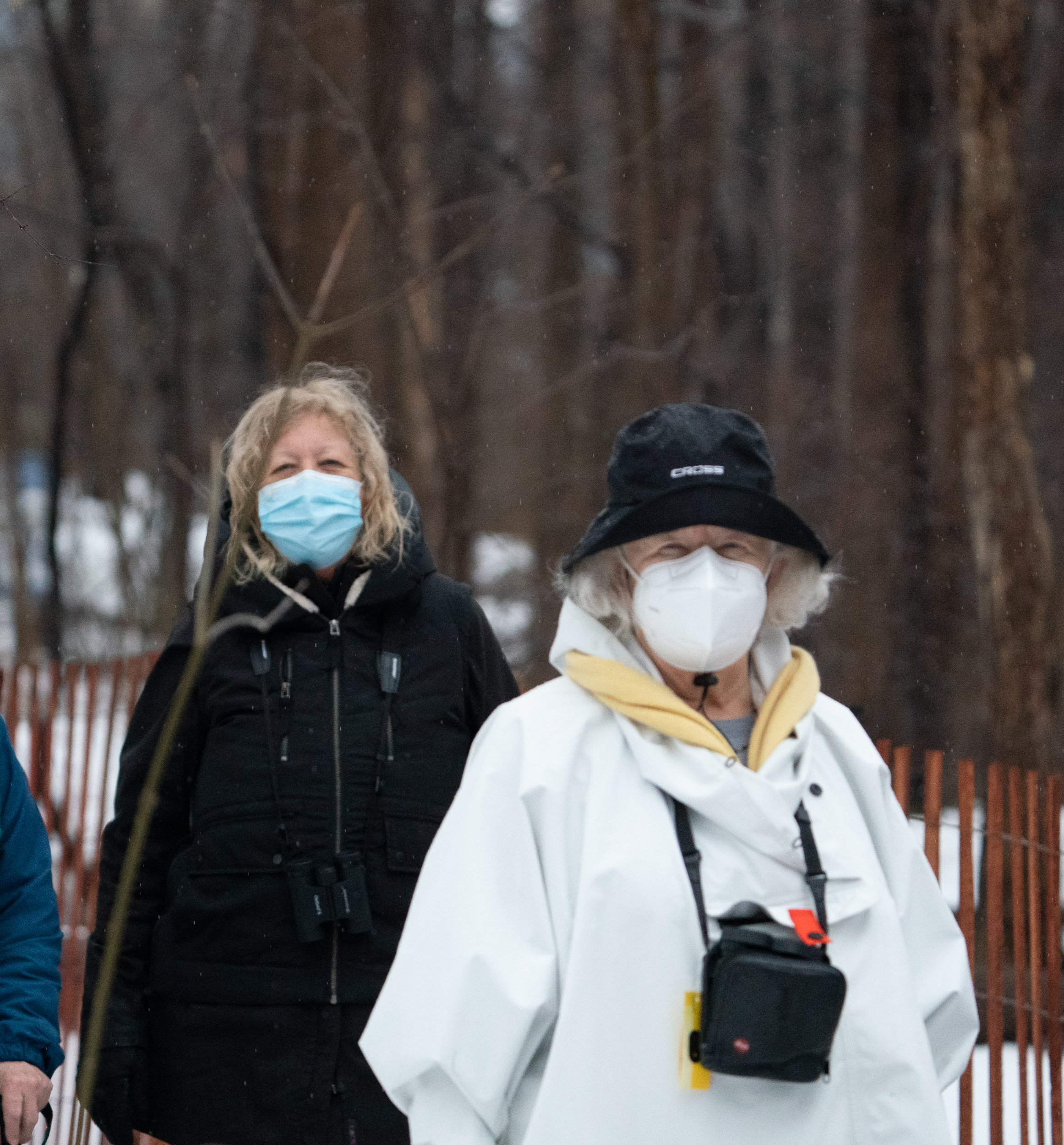


Thank-you to a walker for this:

Some birds:


NATURE POETRY
On the wind in February
Snowflakes float still,
Half inclined to turn to rain,
Nipping, dripping, chill. – Christina Rossetti (1830–94)
Miles Hearn