

From raccoonatticguide.com: Many people think that a raccoon that is outside and active during daylight hours has rabies. People know that racoons are nocturnal animals, and usually only active at nighttime. So if a raccoon is out and about during the day instead of night, something is wrong, right?
While it is true that a rabid raccoon will exhibit a variety of unusual behaviors, activity during daytime is most definitely not a guaranteed indicator of rabies. You see, although raccoons are primarily nocturnal, they do often get some stuff done during the day.
How can I tell if a raccoon has rabies? Rabid raccoons are very sick. Mostly, they are lethargic. Their walk may be erratic, or their legs paralyzed. They may be walking in circles or falling over, or lurching in an unnatural fashion. In short, they just plain look sick. If you see a raccoon outside when it’s light out, and it looks agile, alert, is running or foraging in a smooth and coordinated and normal manner, then you can be almost certain that it doesn’t have rabies. This doesn’t mean that you should approach it and offer it a lick of your ice cream cone, but you most likely have nothing to worry about.
Today we encountered an almost tame raccoon at Humber Bay. It showed no signs of being ill.


I can only guess at the reason: 1) it is an inexperienced juvenile or 2) someone is regularly bringing food for it.
As you see in these photos, it is completely harmless and very comfortable around people:


Today’s group (raccoon 3rd from the right):


Some birds:



Many photographers had come to photograph the Hooded Mergansers:


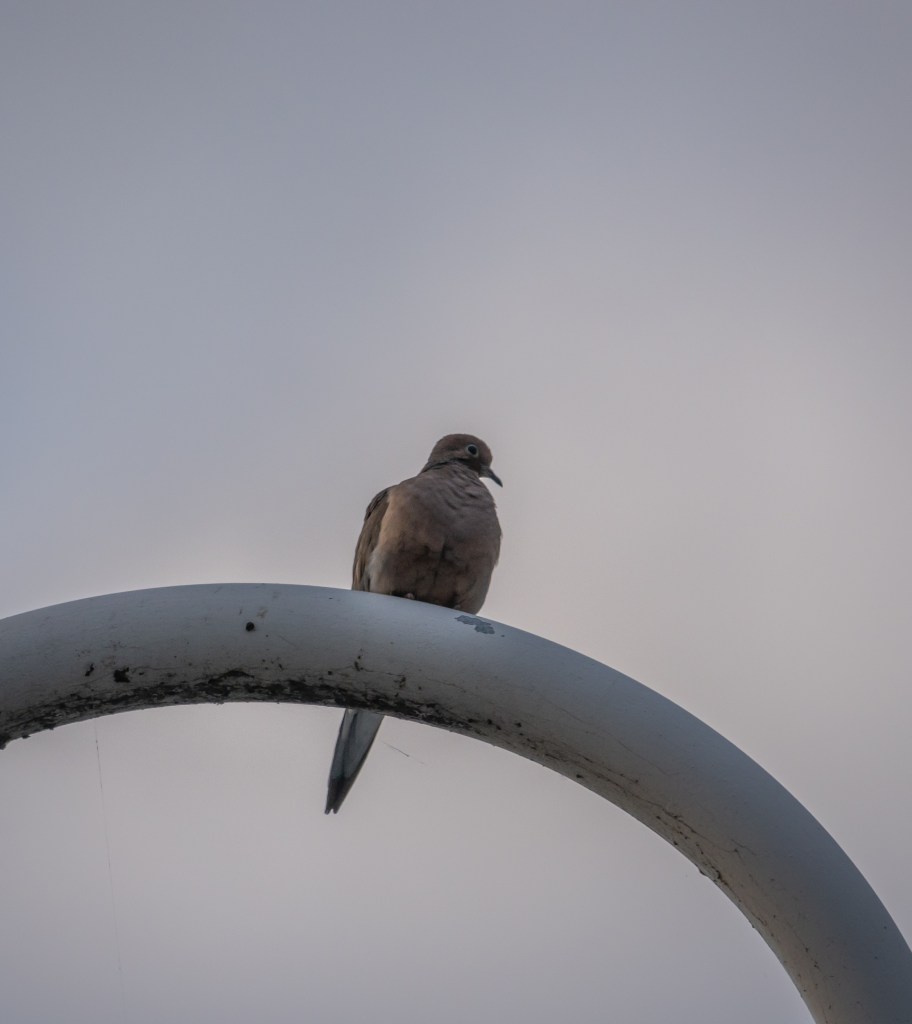
Species list: double-crested cormorant, mute swan, Canada goose, mallard, gadwall, bufflehead, American wigeon, long-tailed duck, red-breasted merganser, hooded merganser, American coot, Cooper’s hawk, ring-billed gull, mourning dove, downy woodpecker, black-capped chickadee, yellow-rumped warbler, house sparrow, northern cardinal, white-throated sparrow. (20 species)
Park scenes:


NATURE POETRY
All day I have watched the purple vine leaves
Fall into the water.
And now in the moonlight they still fall,
But each leaf is fringed with silver. – Amy Lowell (1874–1925)
Miles Hearn