


European Robin
Years ago I read that European Robins were timid little birds who did their best to avoid humans. This is because they were hunted and killed for years just as most other small birds were in Europe.

European Robin
Naturally I was surprised during a recent visit to Ireland to find that Robins are very friendly in the way that Black-capped Chickadees are friendly in North America. I found one between two cars and, rather than fly away, it approached me.

European Robin
A little research tells me that, in Britain, the robin is considered to be the gardener’s friend and, for various folklore reasons, is never to be harmed.

European Robin
The first Europeans in North America saw a bird with an orange chest and named it the robin after the robins that they were familiar with at home.
The American Robin is a member of the thrush family and would more properly have been named the Orange-breasted Thrush.

American Robin
The Beatrix Potter books of my youth feature many drawings of robins.


On several other occasions in Ireland, robins came very close as if to inspect me.
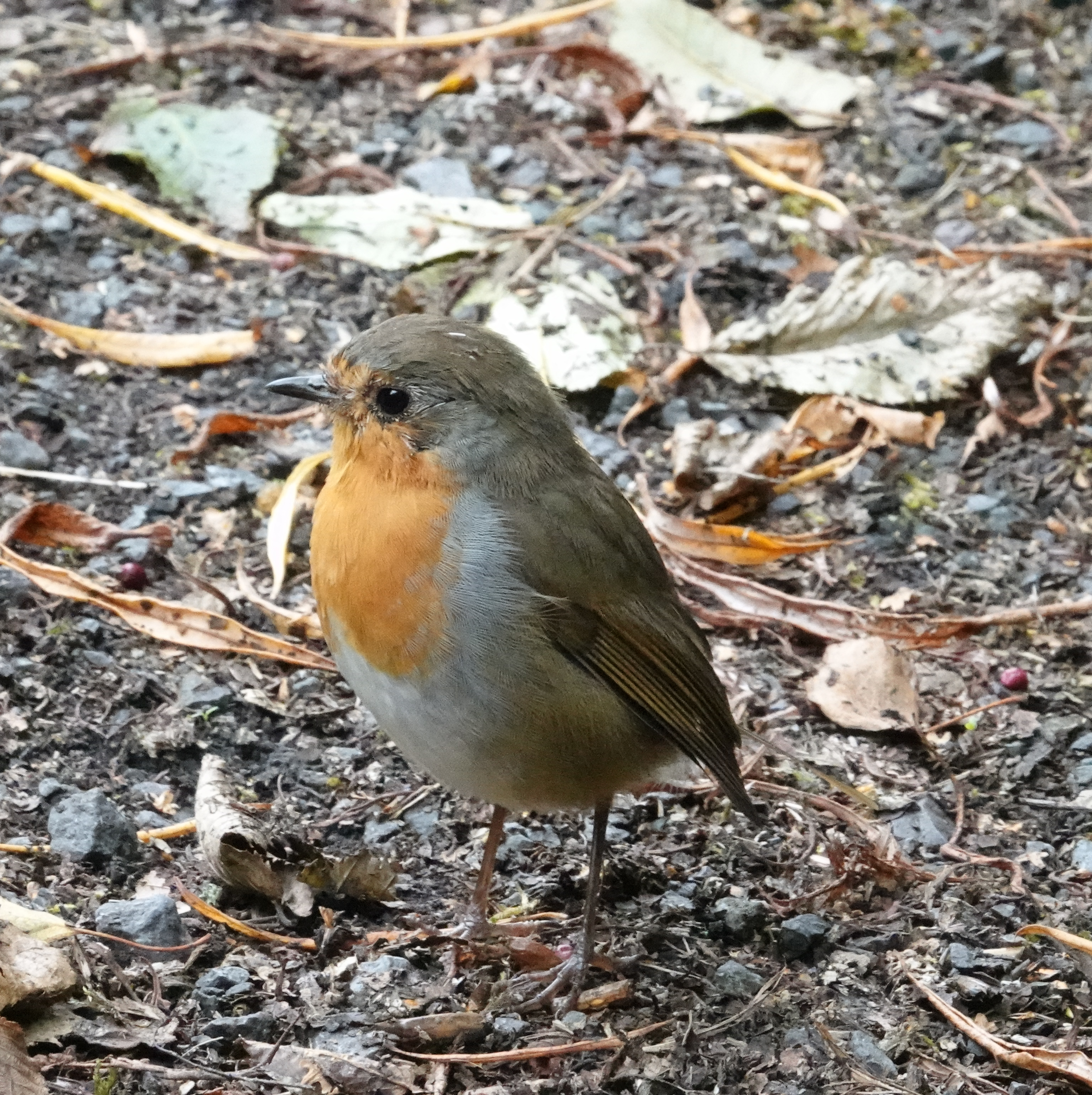
European Robin
While I was sitting on a bench the one in the following photos moved closer and closer.

European Robin
The robin is found across Europe, east to Western Siberia and south to North Africa. They do not migrate except for the most northerly birds.

European Robin
They are considered to be a member of the Old World flycatcher family.

European Robin
In Britain , the bird was originally called Robin Redbreast as the colour orange was unknown until the oranges were introduced into Britain in the 16th century.

European Robin
Their main diet is insects, spiders and worms but they do add fruit and berries in fall and winter. They are frequent visitors to bird feeders in Britain.

European Robin
The robin is the unofficial national bird of the UK.

European Robin
The average lifespan of a robin is just over 1 year but one robin has been recorded as living to 19 years of age.

European Robin
Miles Hearn